The Fund increased 6.16% (Class I) during the quarter, compared to a 2.05% increase in the Russell 2000 Index.
During the quarter, the Fund's holdings in the industrials, energy, and financial sectors provided the largest contribution to absolute return. No sectors detracted from return.
The Fund's outperformance relative to the Russell 2000 Index was primarily the result of security selection in the industrials, financial, and health care sectors as well as an overweight position in the energy sector.
Best Performers
•Auto rental company Avis Budget Group, Inc. (CAR) reported strong quarterly results, and pricing appeared to be in line with management's plans in the important summer months. We estimate the company could generate $4 per share in free cash flow per share in 2015. In addition, competitor Hertz announced a multi-period earnings restatement, potentially reducing the probability that one of Avis's two main competitors will take more aggressive pricing actions.
•Oil and gas exploration and production company Rosetta Resources, Inc. (ROSE) rose in anticipation of an ease in regulations on the exportation of condensate, an ultra-light oil that undergoes minimal processing. This could allow the condensate to be exported at higher prices, alleviating a potential condensate glut in the U.S. and benefitting Rosetta.
•Oil and gas exploration and production company Cimarex Energy Co. (XEC) rose as a result of an improving outlook for domestic oil prices as well as continued strong operational results in core areas. In addition, the company continued to see strong results as it tests the resource potential associated with its acreage position in the Delaware Basin.
•Railroad service company Trinity Industries, Inc. (TRN) reported better than expected revenue and profitability based on continued strength in demand for tank cars coupled with a meaningful positive impact from a large new customer (Element Financial).
•Freight transportation management company Hub Group, Inc. (HUBG) rose as investors began to focus on margin improvement opportunities due to indications of improving intermodal pricing as well as company-specific cost improvement initiatives.
Worst Performers
•Online auction marketplace service provider Liquidity Services, Inc. (LQDT) lost a 2015 rolling stock Department of Defense contract but was the winner of the non-rolling stock contract. However, its winning bid of 4.35% was much higher than the historical contracted rate of 1.8%. This will considerably raise the cost of goods sold of its non-rolling stock segment, thus having a material impact on its profitability.
•Consumer products and services company Steiner Leisure Ltd. (STNR) declined after the company reported its first quarter earnings. The company did not repurchase shares during the quarter despite declines in its stock price following the late 2013 announcement of a non-renewal by Celebrity Cruise Lines. In addition, the quarter reflected continued weakness in the company's Ideal Image laser hair removal business. Later in the quarter, the company announced a 10b5-1 plan under which the company can repurchase shares according to a pre-set plan.
•Shares of oil and gas exploration and production company Contango Oil & Gas Co. (MCF) fell, reflecting disappointing results from an exploration well in the Gulf of Mexico.
•Lift truck manufacturer Hyster-Yale Materials Handling, Inc. (HY) declined after the company provided qualitative guidance for the remainder of 2014 that may have been viewed negatively by some investors. Revenues and pre-tax income both increased during the quarter, but after-tax net income declined as a result of a higher tax rate.
•Information processing company DST Systems, Inc. (DST) declined as the company conducted a secondary offering of common stock for a selling shareholder, Argyros Group.
New Positions
We initiated a new position in Aircastle Ltd. (AYR), an aircraft leasing company with a flexible business model and a rational capital allocation philosophy. We took advantage of an opportunity to purchase shares in the heavily capitalized Georgia bank State Bank Financial Corp. (STBZ) as the depressed stock price reflected investors' lack of patience with a slower than expected pace of capital deployment. We like State Bank's management team led by Georgia banker Joe Evans. This management team has experience successfully building and selling other Georgia banks. We also received shares of transportation infrastructure company XPO Logistics, Inc. (XPO) as a result of its acquisition of holding Pacer International, Inc.
Eliminated Positions
Pacer International, Inc. (PACR) was acquired by XPO Logistics, Inc. which remains in our portfolio. We eliminated our position in specialty pharmaceutical company Actavis PLC (ACT) as the price to intrinsic value relationship narrowed. We originally received shares when Actavis bought portfolio holding Warner Chilcott. We eliminated our position in convenience store distributor Core- Mark Holding Co., Inc.( CORE) as the stock rose almost 40% over the last year and reached our estimate of intrinsic value.
Continue reading here.
Also check out: Diamond Hill Capital Undervalued Stocks Diamond Hill Capital Top Growth Companies Diamond Hill Capital High Yield stocks, and Stocks that Diamond Hill Capital keeps buying| Currently 0.00/512345 Rating: 0.0/5 (0 votes) |
 Subscribe via Email
  Subscribe RSS Comments Please leave your comment:
 More GuruFocus Links
| Latest Guru Picks | Value Strategies |
| Warren Buffett Portfolio | Ben Graham Net-Net |
| Real Time Picks | Buffett-Munger Screener |
| Aggregated Portfolio | Undervalued Predictable |
| ETFs, Options | Low P/S Companies |
| Insider Trends | 10-Year Financials |
| 52-Week Lows | Interactive Charts |
| Model Portfolios | DCF Calculator |
RSS Feed  | Monthly Newsletters |
| The All-In-One Screener | Portfolio Tracking Tool |
 MORE GURUFOCUS LINKS
 | Latest Guru Picks | Value Strategies |
| Warren Buffett Portfolio | Ben Graham Net-Net |
| Real Time Picks | Buffett-Munger Screener |
| Aggregated Portfolio | Undervalued Predictable |
| ETFs, Options | Low P/S Companies |
| Insider Trends | 10-Year Financials |
| 52-Week Lows | Interactive Charts |
| Model Portfolios | DCF Calculator |
| RSS Feed | Monthly Newsletters |
| The All-In-One Screener | Portfolio Tracking Tool |
 59.23 (1y: +92%) $(function(){var seriesOptions=[],yAxisOptions=[],name='CAR',display='';Highcharts.setOptions({global:{useUTC:true}});var d=new Date();$current_day=

 Toby Talbot/AP WASHINGTON -- A gauge of U.S. consumer spending rose solidly in June, in the latest indication that the economy ended the second quarter on a stronger footing. That momentum appeared to have carried into the third quarter, with another report Tuesday showing factory activity in New York state expanded sharply in July. "This is not a fragile economy," said Chris Rupkey, chief financial economist at Bank of Tokyo-Mitsubishi UFJ in New York. "The consumer continues to play their part in moving the economy forward." Core sales, which strip out automobiles, gasoline, building materials and food services, increased 0.6 percent last month after rising an upwardly revised 0.2 percent in May, the Commerce Department said. Core sales, which correspond most closely with the consumer spending component of gross domestic product, were previously reported as being flat in May. Economists had expected them to rise 0.5 percent in June. The report added to signs of the economy's strengthening fundamentals, which could buoy optimism the recovery is on a self-sustaining path, after output contracted sharply in the first quarter. Federal Reserve Chair Janet Yellen told lawmakers the economy continued to improve, but noted that the recovery wasn't yet complete because of still-high unemployment. Yellen, however, cautioned the U.S. central bank could raise interest rates sooner and more rapidly than currently envisioned if the labor market continued to improve faster than anticipated by policymakers. Labor market conditions are firming, with the unemployment rate falling to a near six year-low of 6.1 percent in June and job growth exceeding 200,000 for a fifth straight month. Prices for U.S. Treasury debt fell on the economic data and Yellen's interest rate comments, while the dollar gained against a basket of currencies. U.S. stocks traded lower. June's gains and May's upward revision to core retail sales suggested a pickup in consumer spending in the second quarter after growing at its slowest pace in more than four years in the first quarter because of weak healthcare consumption. Forecasting firm Macroeconomic Advisers raised its second-quarter GDP growth forecast by three-tenths of a percentage point to a 3 percent annual pace. Goldman Sachs (GS) upped its estimate for the quarter by two-tenths to a 3.4 percent rate. Upbeat Outlook A surprise drop in receipts for automobiles, however, held overall retail sales to a 0.2 percent increase in June after advancing 0.5 percent the prior month. "Consumers will likely gain more confidence to spend as the job market improves and summer travel season hits full swing," said Randy Hopper, credit cards vice president at Navy Federal Credit Union in Vienna, Virginia. "We are optimistic that the second half of the year will deliver stronger sales growth." From employment to manufacturing, the economy appears to be firing on nearly all cylinders, with even housing regaining its footing after slumping in late 2013 following a run-up in mortgage rates. Growth estimates for the second quarter top a 3 percent annual rate. In another report, the New York Fed said its Empire State general business conditions index jumped to 25.60 this month, the highest since April 2010, from 19.28 in June. New orders edged up, while factory employment and shipments surged. There were also signs of inflation pressures, with measures of both prices received and paid by manufacturers rising in July. Overall retail sales in June were restrained by a 0.3 percent fall in receipts at auto dealerships. The decline is surprising given automakers reported a surge in motor vehicle sales in June. Auto sales had increased 0.8 percent in May. Excluding autos, sales grew 0.4 percent after rising by the same margin in May. There were increases in sales at non-store retailers, which include online sales, as sales at clothing retailers. Receipts at sporting goods shops rose as did those at electronics and appliances stores. But sales at building materials and garden equipment suppliers fell 1 percent. -. Most of us spend a ton of time researching our options when we first sign up for a plan or policy, then forget all about it and make monthly payments like a robot. But this can cost you.
 J. Scott Applewhite/AP WASHINGTON -- The U.S. government ran a monthly budget surplus in June, putting it on course to record the lowest annual deficit since 2008. The Treasury Department said Friday that its June surplus totaled $71 billion, following a $130 billion deficit in May. The government also ran a surplus in June 2013, bolstered by dividends from Fannie Mae, the mortgage giant under federal conservatorship for the past six years. For the first nine months of this budget year, the deficit totals $366 billion, down 28 percent from the same period in 2013. Tax receipts are up 8 percent compared to the prior year-to-date, while spending has increased 1 percent. The Congressional Budget Office is forecasting a deficit of $492 billion for the full budget year ending Sept. 30. That would be the narrowest gap since 2008. In 2008, the government recorded a deficit of $458.6 billion, which was the record high for deficits up to that time. But with the outbreak of the recession, deficits soared to unprecedented levels, exceeding $1 trillion for four consecutive years. Tax revenues fell during that period, while government boosted spending in an attempt to stabilize the financial system and provide relief to people who had lost jobs. The yearly deficit peaked at $1.4 trillion in 2009 during the worst of the financial crisis. It gradually fell from there, plunging to $680.2 billion last year. Over the next decade, CBO is projecting that the deficits will total $7.6 trillion. The deficit will fall to $469 billion in 2015 before rising again and topping $1 trillion annually starting in 2023, according to the CBO. Spending on the government's major benefit programs, including Social Security and Medicare, will drive those increases as more baby boomers retire. Republicans have accused President Barack Obama of failing to propose significant cost cuts to reduce soaring entitlement costs. Democrats counter that Republicans would rather impose sharp cuts on needed government programs than impose higher taxes on the wealthy. Neither side is expected to make major concessions in this congressional election year. But the budget wars of the past three years have subsided at least for a brief time. An agreement was reached in December on the broad outlines for spending over the next two years. The agreement will allow Washington to avoid the gridlock that culminated in October's 16-day partial shutdown of the government. The budget cease-fire also includes legislation that will suspend the government's borrowing limit through March 15 of next year. That puts off another battle over raising the debt ceiling until a new Congress takes office in January.
 Older pre-retirees are furthest from being retirement-ready, according to a recent analysis by BlackRock and the Employee Benefit Research Institute.


 Murray Close, Warner Bros./AP From a major banking institution kicking off the new earnings season to the most-anticipated theme park debut of the year staging its grand opening, here are some things that will help shape the week that lies ahead on Wall Street. Monday -- Food for Thought The market's going to get off to a slow start on the news front. That's not a surprise given that it was closed Friday for Independence Day. One company that will be in the news on Monday is food and industrial products maker Penford (PENX). Penford's wide range of products include food ingredients, pet and animal products, sustainable bioproducts, starches for paper and packaging products and biofuels. Analysts see Penford earning 21 cents a share, but keep in mind that it has come up short against Wall Street expectations in each of the three previous quarters. Tuesday -- Harry Potter Central Florida will be a bit busier than usual on Tuesday when Comcast's (CMCSK) Universal Orlando has its grand opening of the new Diagon Alley expansion to The Wizarding World of Harry Potter. It's been a rough start. July 8 wasn't the opening date that the park originally wanted, judging by the fact that it had "The Tonight Show" and "Today" run weeklong tie-ins a few weeks ago. Conveniently for Comcast, it owns both the Universal theme parks and NBC. However, with the expansion's indoor coaster proving unreliable -- and even Universal pass holders being denied early access to attractions outside of the new Hogwarts Express train ride -- it could be an interesting debut. The crowds should be huge, the expectations lofty. Wednesday -- Mopping Up WD-40 (WDFC) reports on Wednesday afternoon. This is the company behind the multi-use lubricant. It also offers industrial cleaners, toilet sanitizers and other compounds. WD-40 didn't work out for its shareholders last time out. It posted better than expected 9 percent growth in revenue, but earnings fell just short of expectations. WD-40's guidance for all of 2014 -- calling for earnings of $40.5 million to $42.8 million on $383 million to $398 million in revenue didn't impress the market. Three months later we'll see if it's going to revise those targets higher or lower. Thursday -- A Dollar Saved Family Dollar (FDO) reports on Thursday. The market was planning on Family Dollar merging with Dollar General (DG) -- a move that would unite two leaders of deep discount retail -- but that doesn't seem likely after Dollar General's CEO announced his resignation late last month. This will make Family Dollar's report even more interesting. It probably doesn't help that it has missed Wall Street's income forecasts in back-to-back quarters heading into Thursday's report. Friday -- Can You Bank on It? Earnings season doesn't truly kick in until later in July, but banking giants are some of the first companies to report on the quarters ending in June. They're bankers. They have to be quick with the bean counting. Wells Fargo (WFC) reports on Friday morning, symbolically kicking off the second quarter earnings season that will heat up in the coming weeks. The financial service industry has benefited from the housing boom that's been ignited in part by low loan rates, but the downside to that is that customers aren't in a hurry to open savings and interest-bearing checking accounts in that kind of climate.
  Related SNX Markets Little Changed Ahead Of 4th Of July Break #PreMarket Primer: Wednesday, July 2: Hopes For A United Iraq Fade Related ISCA Top 4 Stocks In The Sporting Activities Industry With The Highest EPS Company News for April 09, 2014 - Corporate Summary
 'No North Korean nukes' say China, South Korea
 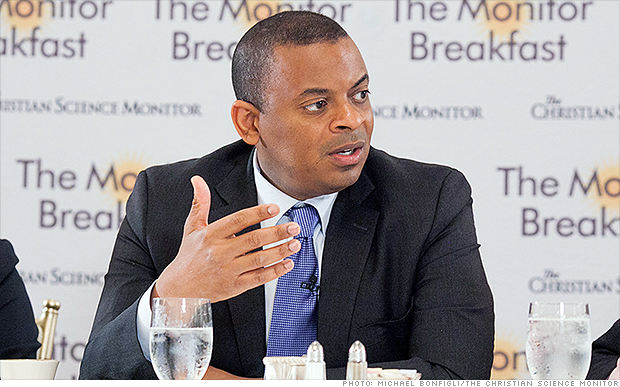 Transportation chief Anthony Foxx warns that the federal government is going to delay payments for state projects fixing highways and bridges next month. WASHINGTON (CNNMoney) Gridlock on Capitol Hill may yield more gridlock for American commuters who have to navigate congested, pothole-filled roads and highways, rundown rails or bad bridges.
 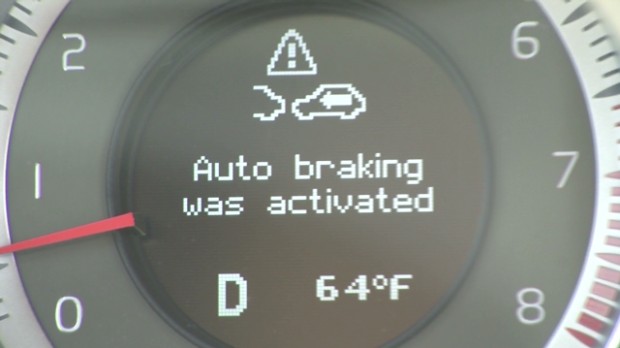 New smart car tech already saving lives